Kakobuy trousers when the waist fits and the seat needs room
Compare the fit of two sizes by working out where a small alteration could help and where you need the extra room from day one.
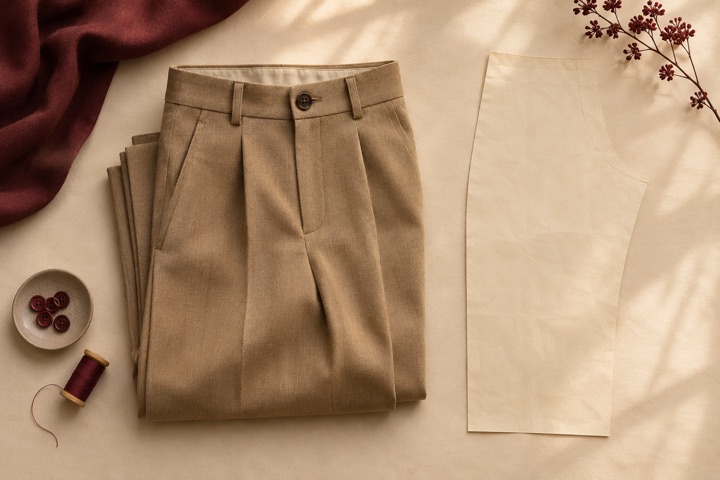
Make two comparisons before you pick a size
Lay down trousers you already sit comfortably in. Measure the waistband across with the closure fastened, then mark a second line at a stated distance below the top edge. Use that second line as a repeatable reference for the seat. For a wide waistband or an unusual rise, describe where the line crosses the pocket or fly so the seller can repeat the position.
Suppose your reference measures 40 cm at the waist and 52 cm across the seat. One listing measures 40 and 50 cm. The next size is 42 and 53 cm. If the seller measured both at the same points and you already use most of the seat room on your reference, trying to stretch the 50 cm option during a long sit carries more uncertainty than the waist figure suggests.
Look inside before counting on alterations
A belt may hold the 42 cm waist securely. Pinching that amount at the back of your reference trousers while wearing them shows whether you dislike the resulting gathers. If a smooth waistband matters, ask for a photo of the inside centre-back seam and show it to the person who would take it in. Pocket position, continuous waistbands and elastic can change the work involved.
Choose the larger size only if you are comfortable with the waist as it is or have a practical adjustment in mind. If you need both measurements to match closely without adjustments, keep looking for a shape closer to your reference. Save the two measurement positions for the next comparison.