Kakobuy cap depth when the circumference already fits
Compare side profiles with the closures set to the same circumference and find out why one cap can still sit higher.
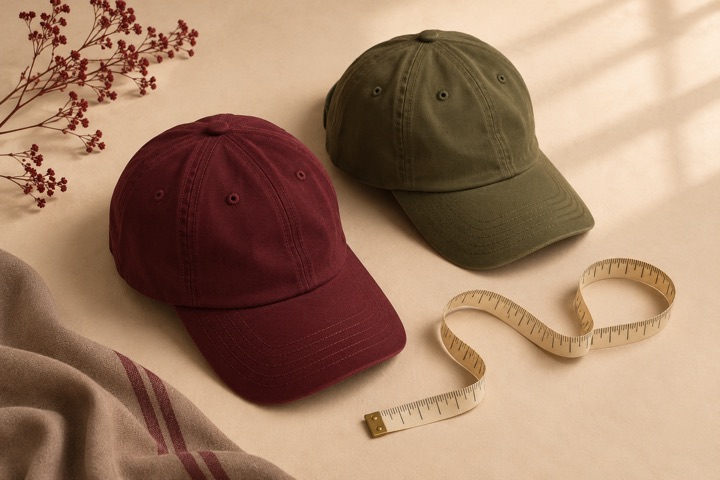
Use the closure to control one variable
Set a cap you wear comfortably to your usual closure position. Photograph it from the side while it is resting on the desk. Place a ruler in the same plane as the near edge and draw an imaginary line running from the junction of brim and band to the rear band. Note how high the front panel rises above that line and where it begins to curve.
Imagine two adjustable caps that both fit at 57 cm. One has a tall, fairly upright front panel, while the other curves back close to the brim. The same band setting can put the top panels in different places. If you have a cap that perches above your ears when you want it lower, use its side photo as a comparison too.
Take the picture before asking for another number
Request a side-on photo of the candidate with the closure fastened near your setting. The profile is easier to read when the cap sits at the table edge and the lens is level with its middle. Ask for a photo of the cap supported in its ordinary shape if the fabric collapses on its own.
Compare front curve and rear opening separately. A tall front with a low rear opening can feel different from a cap that is tall all the way around. Keep the one whose shape matches the reference at the places you care about. If you only have a circumference range, use it to check the closure and keep the depth question open.